Coastal Maranhao has extensive mangrove swamp, some of the most expansive in the world. It isn't as species rich as the rainforest, but a surprising number of species can be found there. From the ubiquitous Orange-winged Parrots (Amazona amazona), Yellow-headed Caracaras, and Scarlet Ibis to Crested Orupendulas, Rufous Crab Hawk, and many others, the mangroves were fun to bird in.
 |
| Scarlet Ibis were gorgeous and perhaps one of the commonest species seen. Late in the evening it was not uncommon to see hundreds flying to roost for the night. |
 |
| They roost in trees in very large numbers. |
 |
| Captivating to the point of distraction. How can you find or even glance at other species when hundreds of these are flying over your head? |
 |
| That color is hard to photograph though. Most of my photos look fake! |
 |
| Yellow-headed Caracaras were common as well. Scarecely a moment passed where one wasn't seen or heard. |
 |
| In this part of Brazil they look different from the rest of the population. There head is more white than yellow. Apparently boating is a hobby. |
 |
| The slightly less common Southern Caracara was also a pleasure to watch. Sorry for the crap photo. |
 |
| Needless to say, Great Kiskadees were just about everywhere, as common here as anywhere else in the Neotropics from South America to south Texas. |
 |
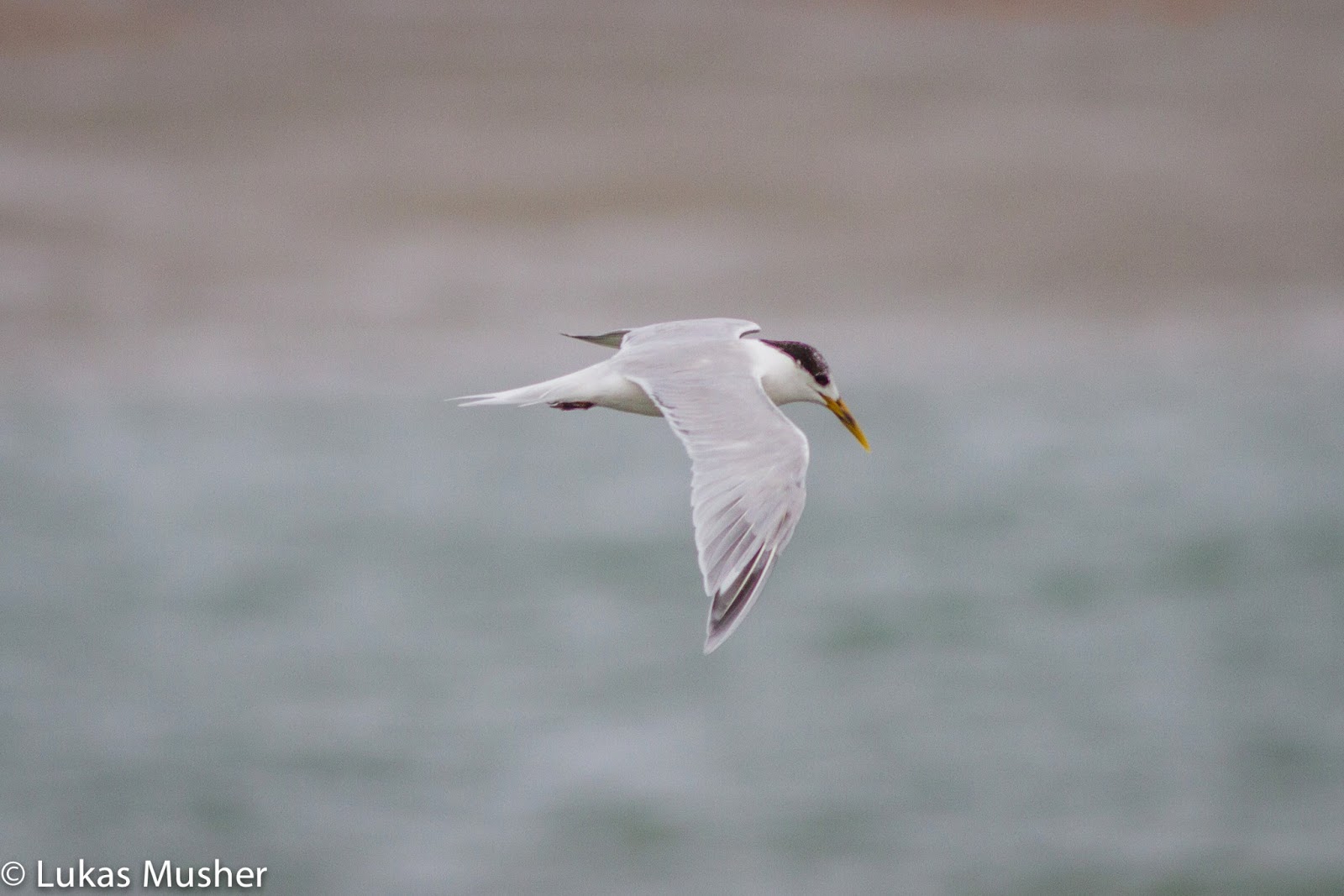
| Cayenne Tern, formerly classified as a population of Sandwich Tern, was uncommon but seen regularly. |
 |
| Large-billed Tern. Another common bird. Another crappy photo. |
 |
| Beware of the evil goats on the windblown dunes of Lencois. Frightening. |
 |
| Orange-winged Parrots. The only Amazona that we saw in the mangroves, and the only parrot we identified there. I think we had parakeets at one point whose identity was never confirmed. |
 |
| Good night. |
Other cool species we saw included Crimson-crested Woodpecker, Ringed and Amazon Kingfisher, Greater Ani, Little Blue, Tricolored, Striated, Rufescent Tiger-, and Cocoi Herons, Great Black Hawk, Tropical Mockingbird, Yellow-billed Tern, Gray-hooded Gull, and of course the countless shorebirds.
~Luke